


HR Compliance & Planning Reset for the New Year
The start of a new year is one of the most important and often overlooked moments for HR and people leaders.
January isn’t just about setting goals. It’s a critical window to pause, review, and reset the systems that shape employee experience, compliance, and organizational culture. Without a deliberate reset, organizations risk carrying forward outdated policies, hidden inequities, and compliance gaps that can undermine trust, engagement, and performance throughout the year.
An effective HR compliance and planning reset goes beyond checking legal boxes. It integrates diversity, equity, and inclusion (DEI) into how policies are written, decisions are made, and accountability is tracked.
Below is a practical framework HR teams can use early in the year to review compliance obligations, strengthen DEI outcomes, and set a clear, sustainable direction for the months ahead.
Why January Matters for HR & DEI Planning
January often brings a mix of renewed energy and lingering fatigue. Employees return from the holidays carrying burnout, personal stressors, and uncertainty about the year ahead. How HR teams respond in this moment sets the tone for trust, fairness, and psychological safety.
From a governance perspective, January is also when:
- New regulations and legislative changes take effect
- Budgets and priorities are finalized
- Engagement strategies are defined
- Leaders reset expectations for performance and conduct
A proactive reset allows HR teams to move from reactive problem-solving to intentional, equity-centered planning.
A Practical Reset Guide for HR, DEI, and People Leaders
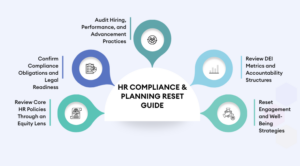
1. Review Core HR Policies Through an Equity Lens
What to review
Code of Conduct and Respectful Workplace policies
- Anti-harassment and discrimination policies
- Accommodation and accessibility policies
- Flexible work, leave, and time-off policies
- Performance management and disciplinary procedures
What effective practice involves
- Policies are written in plain, inclusive language
- Expectations and consequences are clear and consistently applied
- Accommodation processes are transparent and proactive
- Policies reflect diverse needs, not one “default” employee experience
Where DEI comes in
Policies may be legally compliant and still inequitable in practice. An equity lens asks:
- Who benefits most from this policy as written?
- Who may be unintentionally excluded or disadvantaged?
- Are managers equipped to apply this policy consistently and fairly?
Training to support this work
- Inclusive policy design training
- Duty to accommodate and accessibility training
- Bias-aware decision-making for HR and leaders
These learning modules are available through Equality 360, allowing organizations to build capability consistently across the year aligned with their compliance, culture, and inclusion goals.
2. Confirm Compliance Obligations and Legal Readiness
What to review
- Employment standards and labour law updates
- Health and safety requirements
- Human rights obligations
- Pay equity and transparency requirements
- Privacy and data protection practices
What effective practice involves
- Policies and practices updated to reflect current legislation
- HR teams and leaders understand their legal responsibilities
- Clear documentation and escalation processes are in place
Where DEI comes in
- Compliance intersects directly with equity when it comes to:
- Human rights protections
- Pay equity and fair compensation
- Accessibility and accommodation
- Bias and discrimination risk
Organizations that treat compliance as “minimum effort” often miss opportunities to build trust and credibility with employees.
Training to support this work
- Human rights and anti-discrimination training
- Pay equity and compensation fairness education
- Manager training on legal responsibilities and risk prevention
3. Audit Hiring, Performance, and Advancement Practices

What to review
- Job descriptions and recruitment criteria
- Interview and selection processes
- Performance evaluation frameworks
- Promotion and succession planning
What effective practice involves
- Standardized, skills-based hiring practices
- Clear, documented performance criteria
- Reduced reliance on subjective “fit” or informal sponsorship
- Transparent advancement pathways
Where DEI comes in
Many equity gaps don’t stem from policy itself, but from how policies are applied in practice. A reset should examine:
- Who is hired, promoted, and recognized and who isn’t
- Where bias may be influencing decisions
- Whether performance systems reward inclusive behaviours
Training to support this work
- Inclusive hiring and selection training
- Bias and decision-making training for interview panels
- Inclusive performance management and feedback training
4. Review DEI Metrics and Accountability Structures
What to review
- Representation and workforce data (where appropriate and lawful)
- Pay equity and promotion trends
- Engagement and exit data
- DEI goals and progress tracking
What effective practice involves
- Clear DEI goals tied to organizational priorities
- Defined ownership at the leadership and HR level
- Regular check-ins on progress not just annual reporting
Where DEI comes in
- Without measurement, DEI efforts often become performative. Accountability turns values into action and helps organizations course-correct early.
- Equity-focused metrics should be used to guide decisions and continuous improvement and strengthen systems over time.
Training to support this work
- DEI measurement and evaluation training
- Data-informed decision-making for HR leaders
- Building accountability into leadership roles
5. Reset Engagement and Well-Being Strategies
What to review
- Employee engagement survey results
- Well-being and mental health supports
- Manager capacity and workload expectations
- Flexibility and support during high-stress periods
What effective practice involves
- Engagement strategies grounded in real employee feedback
- Leaders equipped to support psychological safety
- Well-being supports that are visible, accessible, and stigma-free
Where DEI comes in
- Well-being is not experienced equally. An inclusive approach recognizes:
- Different cultural relationships to mental health
- Varied caregiving, financial, and accessibility needs
- The impact of systemic stressors on equity-deserving groups
Training to support this work
- Psychological safety and inclusive leadership training
- Mental health awareness for managers
- Trauma-informed and culturally responsive leadership training
Moving From Compliance to Culture
A strong HR compliance and planning reset doesn’t treat DEI as an add-on. It integrates equity into systems, leadership expectations, and everyday decision-making.
When organizations take this approach, they see:
- Reduced legal and reputational risk
- Increased trust and engagement
- Stronger leadership capability
- More sustainable, inclusive workplace cultures
January offers a unique opportunity to reset with intention to build systems that are not only compliant, but fair, inclusive, and human-centred.
When DEI is embedded into systems and leadership, it doesn’t just reduce risk, it creates measurable business value.
One organization that demonstrates this well is Microsoft, where equity and inclusion are treated as core to business strategy, not a separate initiative.

Microsoft has intentionally embedded diversity, equity, and inclusion into how the organization operates from leadership accountability to product development.
This includes:
- Integrating accessibility and inclusion into product design, ensuring products are usable by a broad range of people and communities
- Linking leadership accountability to inclusion metrics, reinforcing that DEI is a leadership responsibility, not an HR side project
- Investing in inclusive leadership and capability building, equipping leaders with the skills needed to lead diverse, global teams
Rather than treating DEI as a stand-alone program, Microsoft has embedded it into systems, expectations, and decision-making.
Business Outcomes Linked to This Approach
This strategic integration has been linked to tangible business outcomes, including:
- Stronger employee engagement and retention, driven by trust and psychological safety
- Increased innovation, supported by diverse teams and inclusive design practices
- Market growth, particularly through accessible and inclusive products that reach broader audiences
- An enhanced employer brand, strengthening Microsoft’s ability to attract and retain top talent globally
Why This Matters for HR & DEI Leaders
Microsoft’s approach illustrates a critical lesson for organizations of all sizes:
When equity is embedded into systems, leadership behaviours, and accountability structures, it becomes a driver of performance and growth, not a compliance exercise.
In Summary
Compliance reduces risk and reinforces organizational accountability.
Equity and inclusion help organizations thrive.
The most effective people and culture teams use the new year to do both thoughtfully, strategically, and with people at the centre.
Additional Resources
Start Your 2026 Inclusive Workplace Journey: Download the Inclusive Workplace Starter Kit
To help organizations begin or deepen this work, CEC has created a free Inclusive Workplace Starter Kit. A practical, actionable resource full of tools to build equity, belonging, and psychological safety.

A hands-on guide to strengthen your culture and support your people.
Stay Connected
Sign up for our newsletter to be the first to know.
Contact us to learn more: hello@canadianequality.ca