

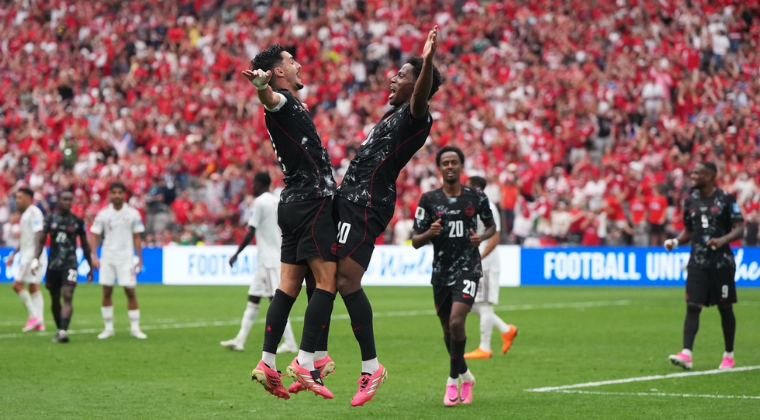
What the FIFA World Cup Can Teach Us About Inclusion, Belonging, and Leadership
Every four years, the FIFA World Cup captures the attention of billions of people around the globe. It is one of the few events that transcends geography, language, politics, religion, and culture. For a brief moment, people from vastly different backgrounds unite around a shared experience.
But beyond the goals, trophies, and national pride, the FIFA World Cup offers something else that leaders should be paying attention to: a living case study in inclusion, belonging, accessibility, and organizational culture.
The 2026 FIFA World Cup, hosted across Canada, the United States, and Mexico, is being promoted as the largest and most inclusive World Cup in history. FIFA has expanded the tournament to 48 teams, bringing more nations, cultures, languages, and communities into the global spotlight than ever before. Alongside this expansion, FIFA has introduced new human rights frameworks, accessibility initiatives, anti-hate measures, and inclusion commitments intended to create a tournament experience where more people feel represented, welcomed, and able to participate.
For workplace leaders, there are powerful lessons hidden within these efforts.

Inclusion Is About Designing for Participation
One of the most significant shifts in recent years has been FIFA’s move from simply accommodating diverse audiences to intentionally designing for inclusion.
For the 2026 tournament, FIFA has announced a range of accessibility initiatives, including sign language interpretation, mobility assistance services, accessible digital experiences, sensory-friendly environments, workforce training on accessibility etiquette, and enhanced wayfinding supports for people with disabilities and limited mobility. FIFA has also established its first Accessibility Advisory Board to help shape decision-making and improve the tournament experience for disabled fans.
This represents an important evolution in thinking.
Traditionally, organizations have approached inclusion reactively: identifying barriers after they emerge and attempting to remove them. Increasingly, leading organizations are embracing universal design principles—building systems, environments, and experiences that work for a wider range of people from the outset.
The same principle applies in workplaces.
When organizations design meetings, recruitment processes, learning opportunities, communication channels, or performance systems around a narrow definition of the “typical employee,” they inadvertently create barriers for many others.
The most inclusive organizations do not simply make accommodations. They ask a different question:
Who might be unintentionally excluded by how we have designed this?
The organizations that consistently outperform their peers are often the ones that recognize inclusion is not a program. It is a design philosophy.
Representation Matters
The expansion from 32 to 48 teams means more countries than ever before are participating in the World Cup. Nations that historically had little opportunity to appear on football’s biggest stage now have a seat at the table.
Representation is often misunderstood as simply “being present.” In reality, representation influences aspiration, engagement, trust, and belonging.
When people see individuals like themselves participating, succeeding, and contributing, they are more likely to believe they belong there too.
The same dynamic exists in workplaces.
Employees look for signals:
- Who gets promoted?
- Who is visible in leadership?
- Whose ideas are heard?
- Whose voices shape decisions?
- Who receives stretch opportunities?
Representation is not simply about optics. It influences whether people believe they can thrive within an organization.
Just as millions of young athletes around the world are inspired by seeing their nation compete on the global stage, employees are influenced by whether they can see pathways for themselves within their organizations.
Belonging begins when people can see themselves reflected in success.
Psychological Safety Is the Foundation of Team Performance
One of the most interesting developments around the 2026 World Cup has been FIFA’s investment in combating hate speech and online abuse.
Through its Social Media Protection Service, FIFA has monitored hundreds of millions of social media posts, identifying harmful content and removing hundreds of thousands of abusive messages during the tournament. FIFA has also convened global conversations involving athletes, policymakers, technology companies, and human rights leaders to address hate speech in football.
At first glance, this may appear unrelated to workplace culture. It is not.
Hate speech, harassment, exclusionary behaviour, and psychological harm undermine performance because they erode psychological safety.
Dr. Amy Edmondson’s research has repeatedly shown that psychological safety is one of the strongest predictors of high-performing teams. People perform best when they believe they can contribute ideas, ask questions, take risks, admit mistakes, and challenge assumptions without fear of humiliation or punishment. Organizations seeking to strengthen these skills can benefit from leadership development focused on psychological safety and inclusive leadership.
The world’s best athletes cannot perform at their highest level when subjected to abuse. Neither can employees. Organizations that intentionally foster psychological safety create environments where people are more willing to contribute ideas, challenge assumptions, learn from mistakes, and collaborate effectively. We explore this further in our article on why psychological safety is a strategic imperative for resilient, high-growth organizations.
Organizations that tolerate gossip, harassment, exclusion, microaggressions, or toxic leadership often discover that innovation, engagement, and retention suffer as a result.
Inclusion is not only a moral imperative. It is a performance strategy.
Human Rights and Inclusion Are Leadership Responsibilities
Perhaps the most significant shift surrounding the 2026 World Cup is FIFA’s adoption of a comprehensive Human Rights Framework.
Host cities across Canada, the United States, and Mexico have been required to develop Human Rights Action Plans addressing issues such as discrimination, accessibility, worker protections, child safeguarding, anti-trafficking efforts, and community impacts. These plans are informed by the United Nations Guiding Principles on Business and Human Rights.
This reflects an important leadership lesson.
Historically, organizations often treated diversity, inclusion, accessibility, and human rights as peripheral concerns—important perhaps, but separate from business strategy.
Today, leading organizations increasingly understand that culture, inclusion, safety, trust, and human rights are leadership issues.
The World Cup’s human rights framework recognizes that creating an inclusive experience requires intentional governance, accountability, measurement, and oversight.
The same is true inside organizations. Culture does not improve because leaders hope it will. It improves because leaders decide it matters and build systems to support it.
Progress and Accountability Can Coexist
At the same time, the World Cup demonstrates an important truth about inclusion work: progress and criticism can exist simultaneously.
While FIFA has introduced significant accessibility and inclusion initiatives, disability advocates and human rights organizations have continued to raise concerns about accessible ticket pricing, companion seating, digital accessibility, and broader barriers affecting disabled fans.
This tension is familiar to anyone working in workplace culture. Organizations often become frustrated when they invest in inclusion initiatives but continue to receive criticism.
However, mature organizations understand that criticism is not necessarily evidence of failure. Often, it is evidence that people trust the organization enough to raise concerns.
The goal of inclusion is not perfection. The goal is continuous improvement. The strongest cultures are not those without challenges. They are the ones willing to listen, learn, adapt, and improve when challenges emerge.
The Belonging Advantage

Perhaps the most powerful lesson from the World Cup is this:
People want to belong to something bigger than themselves.
Fans travel thousands of kilometres, spend significant money, and invest enormous emotional energy because they feel connected to their teams, their communities, and a shared identity.
- Belonging creates loyalty.
- Belonging creates engagement.
- Belonging creates commitment.
Workplaces are no different. People do not stay because of ping-pong tables, free coffee, or motivational posters.
- They stay because they feel respected.
- They stay because they feel valued.
- They stay because they feel seen.
- They stay because they believe they belong.
The organizations that will thrive in the future are not necessarily those with the best strategies, the biggest budgets, or the most sophisticated technology. They will be the organizations that understand a simple human truth:
When people feel they belong, they contribute more fully, collaborate more openly, innovate more courageously, and remain more committed.
The FIFA World Cup may be about football. But at its heart, it is also about something every leader should care about: creating environments where people from different backgrounds can come together, contribute their strengths, and feel that they are part of something meaningful.
Continue the Conversation
The organizations that thrive are often the ones where people feel they belong.
Just as the FIFA World Cup demonstrates the power of bringing diverse people together around a shared purpose, workplaces are strongest when employees feel welcomed, valued, and able to contribute fully.
If you’re looking to strengthen belonging, psychological safety, and inclusive leadership within your organization, connect with Canadian Equality Consulting at hello@canadianequality.ca.
Related Reading
- Rethinking Psychological Safety: A Strategic Imperative for Resilient, High-Growth Organizations
- Leadership Accountability in DEI & Team Culture: From Intention to Impact
Stay Connected
Sign up for our newsletter to be the first to know.