

What Milano Cortina 2026 Taught Us About Inclusion And What Leaders Should Be Paying Attention To
The Milano Cortina 2026 Winter Olympics delivered extraordinary athletic performances.
But if you were watching closely, they delivered something else: A masterclass in inclusion as a performance strategy.
From full gender parity to record LGBTQ+ visibility and historic trans representation, these Games offered a powerful reminder: inclusion isn’t symbolic.
It’s structural. And it directly impacts performance. For leaders and organizations, there are important lessons here.
1. Gender Parity Wasn’t an Accident. It Was Policy.
For the first time in Winter Olympic history, the International Olympic Committee achieved full gender parity in events. Women and men competed in equal disciplines.
That didn’t happen organically. It happened because leadership made a decision.
And the outcome?
Women didn’t just participate, they defined the Games.
Across countries, women authored the most compelling victories. Team USA’s women earned 67% of its gold medals. Canada secured 21 medals. Stories of resilience, return-from-burnout, motherhood, injury recovery, and historic firsts dominated global headlines.
The lesson for organizations:
- Inclusion does not dilute excellence. It expands the talent pool that drives it.
- When systems are designed intentionally, performance follows.
- If your leadership pipeline isn’t balanced, it’s not because talent doesn’t exist. It’s because structures haven’t evolved.
2. Psychological Safety Fuels Comebacks
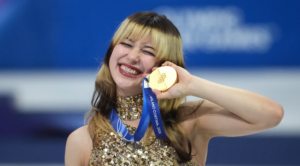
Several of the Games’ defining athletes shared stories of burnout, injury, neurodivergence, motherhood, and mental health.
Athletes like Alysa Liu returned on their own terms after stepping away. Amber Glenn spoke openly about ADHD. Elana Myers Taylor balanced elite competition with parenting children with disabilities.
These aren’t side stories. They are performance stories.
Because excellence thrives where individuals feel safe enough to:
- Struggle publicly
- Step back when needed
- Return without stigma
- Show up fully as themselves
In workplaces, we call this psychological safety. When people don’t fear reputational punishment for being human, performance improves.
Milano Cortina showed us what happens when people are supported, not silenced.
3. Visibility Is a Performance Multiplier
With approximately 45–49 openly LGBTQ+ athletes, the highest ever at a Winter Games, Milano Cortina set a new bar for representation.
And LGBTQ+ athletes won. Eleven medals. Five gold.
But the deeper story wasn’t medal counts. It was visibility without concealment.
Pride House Milano provided space for community. Athletes celebrated partnerships openly. Identity wasn’t hidden, it was integrated.
The workplace parallel is clear: When employees don’t expend energy masking who they are, they redirect that energy toward innovation, collaboration, and performance.
Belonging is not a “soft” metric. It’s an efficiency metric.
4. Inclusion Without Policy Creates Tension
The participation of Swedish skier Elis Lundholm, the first openly transgender man at a Winter Olympics, marked a historic moment. But it also exposed complexity.
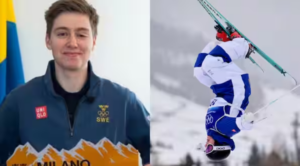
Representation alone is not enough. Clear, evidence-based policy matters.
In both sport and organizations, leaders must navigate:
- Fairness
- Safety
- Dignity
- Transparency
Avoiding hard policy conversations doesn’t eliminate tension, it amplifies it. High-performing systems require clarity.
5. Inclusion Is Measurable And It Should Be
One of the clearest leadership lessons from Milano Cortina is this:
- Progress was visible because it was measured.
- Gender parity wasn’t aspirational language. It was a quantifiable target.
- Organizations often speak about inclusion in values statements, but rarely in metrics.
Leaders should be asking:
- What does representation look like at each leadership level?
- Where are attrition gaps by demographic?
- Who is promoted and who isn’t?
- Where does psychological safety break down?
What gets measured gets improved.
Inclusion Is Not a Finish Line
Milano Cortina 2026 will be remembered as a turning point.
- Women led.
- 2SLGBTQ+ athletes competed openly and excelled.
- A trans athlete stepped onto the world stage.
But progress in inclusion is iterative. The real work in sport and in organizations is ongoing.
Because inclusion is not about optics. It’s about building systems where the best talent can thrive.
Stay Connected
Sign up for our newsletter to be the first to know.
Contact us to learn more: hello@canadianequality.ca