

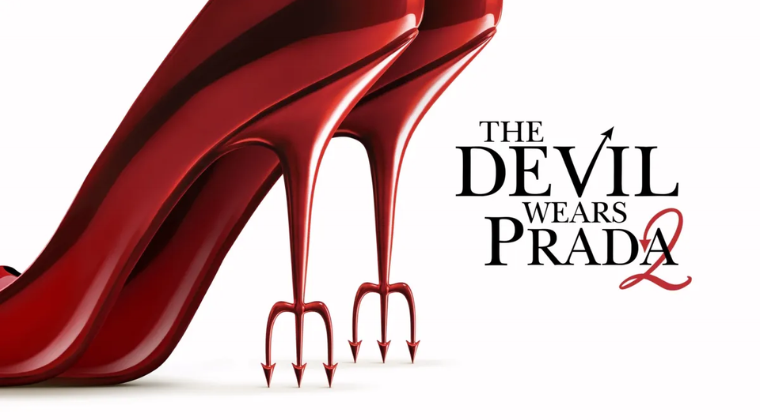
The Devil Wears Prada 2 and the Workplace Questions We Still Struggle to Answer
When The Devil Wears Prada first came out in 2006, many viewers saw it as aspirational. Miranda Priestly was feared, revered, and somehow admired all at once. Her impossible standards, emotional distance, and relentless expectations were framed as the price of excellence. Twenty years later, the cultural conversation has shifted.
The release of The Devil Wears Prada 2 lands in a very different workplace era — one shaped by conversations about burnout, psychological safety, toxic leadership, allyship, inclusion, and employee wellbeing. The sequel revisits Miranda not as an untouchable icon, but as a leader struggling to adapt to a world where fear-based leadership is no longer celebrated in the same way.
And honestly? Watching the film left me thinking less about fashion and more about workplace culture.
Because beneath the glamour, sharp dialogue, and couture is something deeply familiar to many professionals: talented people staying loyal to environments that continually harm them.
The Complexity of Toxic Leaders
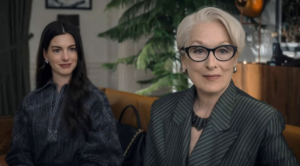
Miranda Priestly remains one of the most compelling workplace leadership characters in film because she is not written as purely evil. She is brilliant. Strategic. Visionary. Highly competent. She understands her industry deeply and demands excellence from those around her. Multiple analyses of the film have noted her autocratic leadership style and the fear-driven culture that emerged around her.
But competence does not neutralize harm.
Organizations often protect high-performing leaders despite the damage they create because the results appear undeniable. Revenue grows. Prestige increases. Deadlines are met. The organization becomes synonymous with excellence. Meanwhile, the human cost becomes normalized as “just how things are here.”
What struck me in The Devil Wears Prada 2 was the subtle attempt to humanize Miranda further. The film suggests she is trying — albeit imperfectly — to evolve within a changing workplace culture.
She is softer in moments. More reflective. Slightly more self-aware. But trying to be better and actually creating psychological safety are not the same thing.
Many leaders today genuinely believe they are improving because they are less overtly harsh than before. They may yell less. They may occasionally acknowledge wellbeing. They may adopt the language of empathy. Yet their teams still operate in fear. Employees still feel disposable. Boundaries are still punished. Favoritism still exists. Emotional volatility still shapes decision-making.
Intentions do not erase impact.
Why Do People Stay?
The question I kept wrestling with throughout the movie was this:
Why did Andy and Nigel continue to put themselves on the line for Miranda?
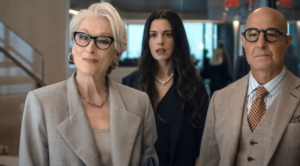
Nigel is one of the most fascinating characters in the franchise because he represents something many organizations quietly depend on: the loyal culture carrier.
He is emotionally intelligent. Deeply competent. Generous with mentorship. He sees Andy’s potential before she sees it herself. In both films, Nigel acts as a sponsor — not just a mentor. Sponsorship matters because it involves using one’s influence and credibility to actively open doors for someone else. At one point, Nigel quietly makes a call that helps Andy get hired, positioning her for opportunities she would not have accessed otherwise.
And yet, despite his brilliance and loyalty, Nigel is continually overlooked by Miranda.
His contributions are expected rather than celebrated. His proximity to power never fully translates into power itself.
Organizations are filled with “Nigels” — people who stabilize teams emotionally, onboard new employees, preserve institutional knowledge, mentor emerging talent, and absorb the fallout of difficult leaders. They are often indispensable and simultaneously undervalued.
So why stay?
Research on toxic workplace dynamics consistently shows that people rarely stay solely because of compensation or prestige. They stay because of emotional complexity:
- Hope that things will improve
- Loyalty to colleagues
- Alignment with the mission
- Attachment to moments of validation
- Fear of losing status or opportunity
- The belief that suffering is temporary and success will eventually justify it
And sometimes, people stay because toxic leaders are not toxic all the time.
Miranda occasionally shows vulnerability. Occasionally advocates for Andy. Occasionally demonstrates trust or respect in subtle ways. Those moments create emotional confusion because they interrupt the narrative of harm. Employees begin searching for the “good version” of the leader, believing if they just work harder, perform better, or prove themselves more fully, that version will appear more consistently.
This is one reason high-performing toxic cultures can persist for years.
People Don’t Leave Organizations. They Leave Leaders.
That phrase has become somewhat cliché in leadership conversations, but films like The Devil Wears Prada 2 remind us why it endures.
People can tolerate difficult work.
They can tolerate long hours.
They can even tolerate high pressure.
What becomes unsustainable is relational harm.
The inability to feel psychologically safe.
The unpredictability.
The humiliation.
The emotional exhaustion of constantly trying to anticipate someone’s reactions.
The feeling that your worth is conditional.
What’s fascinating about The Devil Wears Prada 2 is that it subtly explores whether organizations can survive when leadership styles fail to evolve alongside culture.
Today’s workforce increasingly expects:
- accountability,
- emotional intelligence,
- inclusive leadership,
- mentorship,
- transparency,
- and humanity.
Not perfection. Humanity. And leaders who cannot adapt to that shift are increasingly struggling to retain talent.
The Importance of Workplace Allyship

One of the quieter themes in the film is allyship.
Nigel repeatedly creates opportunities for Andy despite operating within the same toxic system himself. He translates unwritten rules. Coaches her privately. Gives her access to information and networks. Protects her credibility in rooms where she lacks power.
The strongest leaders and colleagues understand that inclusion is not simply about representation; it is about access, sponsorship, and protection.
And yet the movie also demonstrates a hard truth: allyship inside toxic systems has limits.
Nigel can support Andy individually, but he cannot fully protect her from the broader culture. This reflects something many employees experience in real workplaces. One supportive colleague or manager can make an environment survivable, but individual kindness cannot fully compensate for systemic dysfunction.
Looking for practical ways to strengthen allyship, psychological safety, and inclusive leadership? Explore our workplace culture training programs and microlearning solutions designed to turn awareness into everyday action.
The Role of the “Work Bestie”

One of the most overlooked workplace lessons from both films is the importance of workplace friendship. We often underestimate how much “work besties” matter organizationally.
Research consistently shows that employees who have strong interpersonal relationships at work experience:
- higher engagement,
- greater resilience,
- increased retention,
- and improved wellbeing.
Connection acts as a buffer against stress. In toxic cultures especially, workplace friendships often become survival mechanisms. They create moments of psychological safety within otherwise unsafe systems.
They stay because someone checks in on them after a difficult meeting. Someone validates their experience. Someone makes them laugh between impossible deadlines. Someone reminds them they are not losing their mind. That human connection is not a soft organizational outcome. It is foundational.
The Leadership Lesson We Should Actually Take Away
I do not think The Devil Wears Prada 2 fully redeems Miranda — nor should it.
But I do think the film reflects something important about modern leadership conversations: people are increasingly interested in complexity rather than caricature.
Toxic leaders are not always monsters. Sometimes they are highly capable people shaped by systems that rewarded their behaviour for decades. Sometimes they are deeply insecure. Sometimes they genuinely believe pressure produces excellence. Sometimes they are trying to evolve but lack the skills to lead differently.
But regardless of intention, leaders are still responsible for the cultures they create. Brilliance without humanity eventually becomes unsustainable.
Organizations do not thrive long-term because employees are afraid. They thrive because people feel valued enough to contribute fully, challenge ideas safely, innovate openly, and trust one another. The real luxury in today’s workplace is no longer prestige. It is psychological safety.
Want to build a workplace culture where people feel safe to contribute, challenge ideas, and perform at their best?
Explore Culture 360 and our workplace culture training programs designed to help leaders strengthen psychological safety, inclusion, and employee engagement. Connect with us at hello@canadianequality.ca to learn how we can support your team.
Stay Connected
Sign up for our newsletter to be the first to know.