

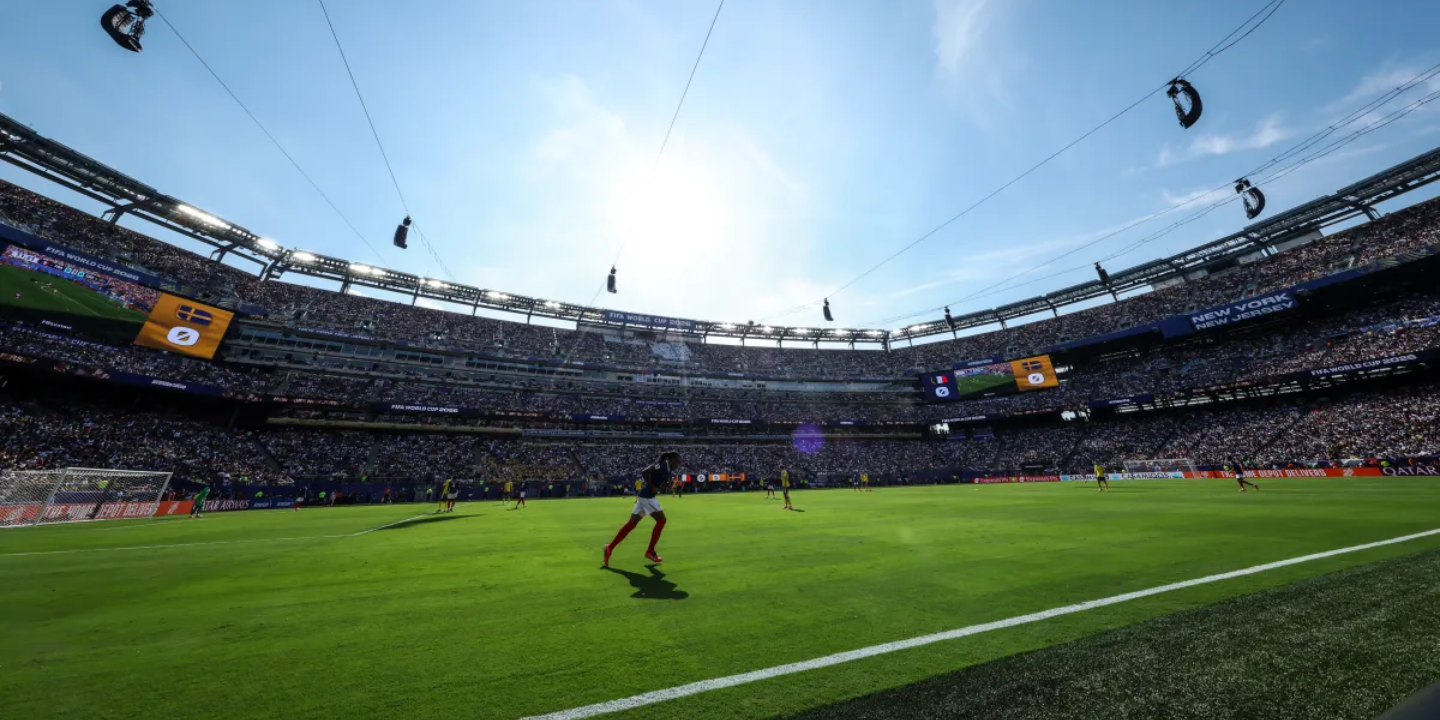
More Than A Game: Football, Culture & the Power of Connection

Football as a global language
Football’s cultural power begins with its accessibility. The basic game requires relatively little: a ball, an open space and people willing to play. Its rules are recognizable across continents, even when participants do not share a spoken language. Its rituals: anticipation, competition, disappointment, celebration and respect are understood almost instinctively.
This accessibility has allowed football to become deeply rooted in vastly different cultures. Every country and community interprets the game in its own way. There are distinct songs, styles of play, celebrations, superstitions, histories and relationships to national identity. But these differences exist within a framework that remains recognizable to everyone.
At the World Cup, cultural expression is not a side effect of the tournament. It is one of its central features. Supporters arrive wearing national colours, carrying flags and singing songs that may be unfamiliar to those around them. They bring languages, food, humour and traditions into temporary shared spaces. The result is not cultural sameness, but cultural proximity.
During the tournament, Norwegian and French supporters, for example, exchanged their respective traditions of the “Viking row” and coordinated clapping in a public display of humour and camaraderie. FIFA described it as part of a broader atmosphere in which rivalries were largely kept on the pitch while relationships developed among supporters beyond it.
These encounters matter. Cultural appreciation often begins not with a formal educational program, but with proximity, curiosity and positive shared experience. Someone hears a chant, asks about a flag, tastes a food or learns why a particular victory matters so deeply to another community. Culture ceases to be an abstract category and becomes connected to real people, emotions and stories.
This is one reason football can serve as a bridge. It creates a reason for people to approach one another.
The relationships hidden beneath the rivalry
One of the most compelling features of international football is the complicated relationship between competition and connection. During a World Cup, players represent nations. They compete with extraordinary intensity and carry the expectations of millions of people. Yet many opponents know each other intimately.
They may train together every day at the same club. They may share dressing rooms, tactical meetings, celebrations, disappointments and family milestones. They may communicate more frequently with an opponent than with some members of their own national team.
For 90 minutes, these relationships are reorganized. Club teammates become international rivals. Friends challenge each other for possession. Players who normally collaborate toward a shared goal must temporarily work against one another.
FIFA highlighted this dynamic before the tournament by identifying several potential contests between club teammates. These matchups were compelling precisely because the players involved understood each other so well.
After the whistle, however, another set of behaviours often emerges: a hand extended to someone on the ground, an embrace between opponents, a private word of consolation or a jersey exchanged as a sign of mutual respect.
These moments are easy to dismiss as sporting etiquette, but they communicate something important. Competition does not have to require dehumanization. People can oppose one another in a particular context without reducing each other to enemies. They can pursue incompatible outcomes while preserving dignity and relationship.
This is an increasingly important lesson in polarized workplaces and societies.
Many organizations have unintentionally created cultures in which disagreement is treated as disloyalty, challenge becomes personal and competition for recognition erodes trust. People are encouraged to collaborate, yet rewards, promotions and status may depend upon outperforming colleagues. Under pressure, organizational identity can fragment into departments, professions, regions, generations or ideological camps.
Football demonstrates that intense competition and sustained relationship are not mutually exclusive. But their coexistence depends upon norms.
Players understand the boundaries of the contest. They share rules, recognize the legitimacy of the opposition and, ideally, preserve respect for the person even while resisting their actions on the field. When those norms collapse, the game deteriorates. The same is true in organizations.
Leaders cannot eliminate disagreement, nor should they try. Healthy cultures are not defined by continuous consensus. They are defined by the ability to engage disagreement without humiliation, exclusion or retaliation.
Contact can reduce prejudice but contact alone is not enough
The bridge-building potential of football also has a strong foundation in social research.
Intergroup contact theory proposes that meaningful interaction between members of different groups can reduce prejudice, particularly when people engage with relatively equal status, work cooperatively, pursue common goals and operate within an environment that supports the relationship. Large bodies of research have generally found an association between constructive intergroup contact and lower prejudice.
Team sport can create many of these conditions. Players rely upon one another, work toward an outcome no individual can achieve alone and are evaluated according to a shared purpose. Research involving diverse soccer teams has found that, under appropriate conditions, playing together can build trust and tolerance across the lines of conflict.
The qualification “under appropriate conditions” is essential.
Simply placing different people in the same room, workplace or football stadium does not create inclusion. Contact can reinforce division when people experience hostility, unequal power, tokenism or abuse. Diversity without psychological safety may increase anxiety rather than reduce it. Representation without belonging may leave people visible but unsupported.
The tournament’s online abuse statistics are a powerful reminder that exposure to diversity does not automatically produce respect. People can watch the same event and still direct racism, misogyny and hatred toward those taking part.
This distinction has direct implications for organizational leaders.
A diverse workforce does not necessarily become an inclusive one through proximity alone. Leaders must create the conditions that allow differences to become sources of learning rather than division. That requires equitable participation, shared goals, clear behavioural expectations, credible accountability and repeated opportunities to build relationships beyond transactional work.
The leadership lesson is not simply to bring different people together. It is to design the environment in which they meet.
Collective excellence is built through interdependence
Spain’s victory also offered a more conventional, but no less important, leadership lesson: high performance is often the product of a system rather than a single extraordinary individual.
Reuters described Spain’s championship as a victory grounded in collective strength, patient possession and contributions from across the squad. The winning goal itself was created by substitutes, illustrating the importance of depth and readiness beyond the starting lineup. Spain’s team also brought together players from different regions, identities and family histories within one coordinated national team.
There is a tendency in both sport and business to mythologize individual leaders. We celebrate the decisive scorer, visionary chief executive or charismatic founder while overlooking the structures, relationships and less-visible contributions that make performance possible.
Football makes this interdependence difficult to ignore. A striker’s success depends upon service from teammates. Creative players require defensive stability. Starters rely on substitutes who must remain prepared despite uncertainty. Coaches depend on analysts, medical staff and support teams whose names may never appear on the scoreboard.
The strongest teams are not necessarily those with the greatest concentration of individual talent. They are those capable of turning different talents into coordinated action.
The same principle applies to workplace culture. Inclusion is not separate from performance; it influences whether people can contribute their knowledge, challenge flawed assumptions, adapt under pressure and trust others to fulfil their roles. Belonging does not mean everyone plays in the same way. It means people understand how their distinct contribution advances a shared purpose.
Leaders build collective excellence by making interdependence visible. They recognize contributors beyond the most prominent voices, build depth rather than dependency and create systems in which success can be shared.
Shared identity without forced sameness
A World Cup team asks players to hold multiple identities at once.
A player may be shaped by migration, language, faith, race, religion, family heritage and club affiliation while also representing a national team. The 2026 tournament was exceptionally culturally diverse, with reporting indicating that nearly a quarter of players were born outside the country they represented and many others came from migrant families.
This complexity challenges narrow ideas about who belongs to a nation or to any community.
Belonging is sometimes misunderstood as assimilation: the expectation that individuals minimize their differences in order to fit a dominant norm. Football offers a different possibility. Players do not need identical histories or cultural identities to pursue the same goal. Their diversity is carried into the team rather than erased by it.
A healthy shared identity is expansive enough to hold difference.
Organizations frequently struggle with this balance. They want strong culture, but may define culture so narrowly that it rewards similarity. Employees who communicate, lead or relate differently can be perceived as a poor “fit,” even when they are fully capable of contributing to the organization’s purpose.
The better question is not whether someone resembles the existing team, but whether the organization has created a shared mission broad enough to benefit from their contribution.
Strong culture should provide common purpose and behavioural clarity without demanding cultural conformity.
The World Cup’s power is also a responsibility
It is tempting to describe football as inherently unifying. That description is emotionally appealing, but incomplete.
Football can bring people together, and it can also become a vehicle for exclusion, nationalism, racism, sexism and violence. Its institutions are shaped by the same power dynamics that affect governments, workplaces and communities. A tournament can produce genuine friendship among supporters while also exposing athletes to extraordinary levels of abuse. It can celebrate multicultural teams while structural inequalities remain unresolved beyond the league.
The power of sport is therefore not automatically virtuous. It is a form of social infrastructure. Its impact depends upon how it is governed, funded and led.
UNESCO’s work on the social impact of sport identifies equality and social inclusion among the areas in which sport can make a meaningful contribution. But realizing that contribution requires deliberate policy, investment and inclusive practice.
Leaders should approach organizational culture in the same way. Culture will form whether they shape it or not. Shared experiences can build trust, but they can also deepen exclusion when harmful behaviour is tolerated. Symbols of unity are meaningful only when supported by systems of fairness and accountability.
The World Cup’s most hopeful moments should therefore be understood not as proof that unity simply happens, but as evidence of what is possible when people are given a shared space, common rules and reasons to see one another differently.
The next global stage belongs to the women’s game

As attention moves beyond the men’s final, the global football community should not allow its energy to disappear. It should carry that attention forward to the FIFA Women’s World Cup in Brazil, scheduled for June 24 to July 25, 2027: the first Women’s World Cup hosted in South America.
The women’s tournament should not be framed as a secondary version of the men’s competition. It is a global event with its own history, significance, athletes, supporters and capacity to transform culture.
The 2023 Women’s World Cup demonstrated the scale of that potential. Nearly two million spectators attended, with an average crowd of more than 30,000 and stadiums operating at almost 87 per cent capacity. A FIFA and World Trade Organization study estimated that the tournament contributed almost US$1.9 billion to global gross domestic product, created more than 38,000 jobs and added US$932 million to household incomes.
These are not indicators of a niche product. They are evidence of demand.
Nevertheless, structural inequality remains. The prize fund for the 2023 Women’s World Cup was US$150 million, three times the 2019 amount, but still only approximately one-third of the US$440 million awarded at the 2022 men’s tournament. Women also remain underrepresented in leadership across international sport, holding only about one-third of executive positions in international sporting federations.
The next stage of women’s football therefore requires more than celebration. It requires sustained investment in players, coaching, facilities, broadcasting, safeguarding, sponsorship, media coverage and leadership pathways.
There is a familiar pattern in both sport and workplaces: women demonstrate excellence, audience demand and economic value, yet continue to be asked to prove the case for investment. Men’s systems, by contrast, are more often treated as inherently worthy of resources.
Equity requires reversing this logic. Investment should not arrive only after every doubt has been eliminated. Investment is one of the conditions that allows a field to grow.
For leaders, the lesson extends beyond football. Organizations often claim that they cannot promote, sponsor or invest in underrepresented talent because the pipeline is insufficient. Yet pipelines are not naturally occurring phenomena. They are built through access, visibility, mentorship, opportunity and resources.
The question is not merely whether talent exists. It is whether institutions are prepared to recognize and invest in it.
What leaders can carry forward
When the spectacle of the World Cup has ended, leadership is revealed in what remains.
The World Cup reminds us that people can compete without abandoning respect. That shared goals can create relationships across cultural and national difference. That diverse teams can form a meaningful collective identity without requiring sameness. That performance depends on contributions far beyond the most visible stars. And that bringing people together is only the first step; leaders must also establish the conditions in which connection can become trust.
It also reminds us that moments of unity should not be romanticized. The same platforms that create belonging can reproduce discrimination. The same institutions that celebrate diversity may continue to distribute power and resources unequally. Inclusion requires more than inspiring images after a match. It requires decisions about whose safety is protected, whose contribution is valued, whose story is told and whose potential receives investment.
Perhaps this is football’s most important cultural lesson.
For 90 minutes, people can enter a shared world without surrendering where they come from. They can care deeply about different outcomes and still recognize something human in one another. They can experience rivalry without making permanent enemies. They can grieve, celebrate and begin again.
The final whistle ends the competition. It does not have to end the connection.
As the world looks toward the Women’s World Cup in Brazil, the challenge is to carry forward more than enthusiasm for the game. It is to carry forward a commitment to the values football displays at its best: courage, interdependence, curiosity, mutual respect and the belief that difference need not prevent us from building something meaningful together.
The enduring measure of this World Cup will not only be who lifted the trophy. It will be whether we learned how to remain in relationship after the contest was over.
Related Reading
Stay Connected
Sign up for our newsletter to be the first to know.