

Bad Bunny at the Super Bowl: Love, Legacy & Resistance in Motion
This wasn’t just a performance, he offered a cultural narrative rooted in history, resistance, love, and hope.
As the first solo Spanish-language artist to headline the Super Bowl Halftime Show, Bad Bunny used one of the world’s most watched stages to center Puerto Rican identity and Latin American culture without dilution, translation, or apology. That choice alone was historic. What made it extraordinary was how he told the story.
In a time when communities are being targeted, and told to disappear, Bad Bunny chose joy. He chose love. Choosing both, especially in difficult times, is a powerful act of resistance. This wasn’t escapism, it was resistance.
A reminder that celebrating culture, telling the truth, and refusing to make yourself smaller is an act of power.
To be seen.
To be joyful.
To exist fully and unapologetically.
A Performance Grounded in History
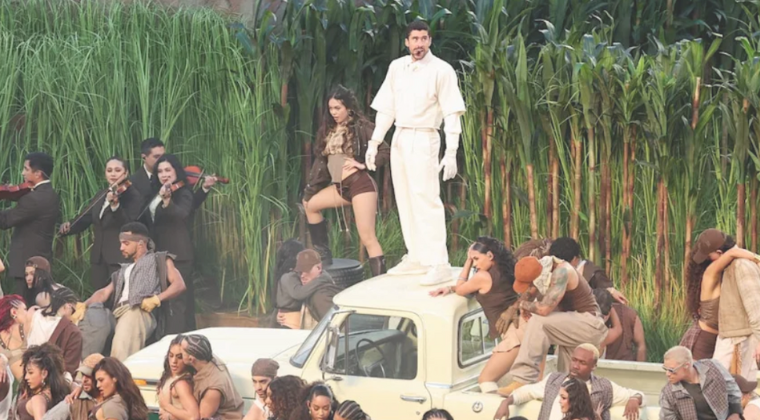
The performance opened in the sugarcane fields, a deliberate and powerful nod to Puerto Rico’s agricultural roots. For centuries, sugarcane defined the island’s economy and shaped the lives of generations of workers. Sugarcane represents both survival and exploitation: land turned into profit by colonial powers, worked largely by enslaved and racialized people, especially those of African descent. Beginning here grounded the show in labour, resilience, and survival, a reminder that culture is built on the backs of people whose stories are often erased.
The appearance of a string quartet amid the fields introduced a striking juxtaposition. Classical music layered over agricultural labour symbolized colonization and its lasting impacts, the imposition of foreign systems, values, and power structures that disrupted local economies and cultures. It was visual storytelling at its best: subtle, intentional, and emotionally resonant.
Infrastructure & Neglect
As the performance evolved, dancers appeared atop electrical poles, a haunting reference to Puerto Rico’s fragile power grid and the ongoing blackouts that persist years after Hurricane Maria. This moment quietly but unmistakably highlighted the lack of sustained support from mainland U.S. and the everyday realities Puerto Ricans continue to navigate.
This wasn’t spectacle for spectacle’s sake. It was a reminder that infrastructure is political, that neglect is visible, and that culture often carries truths policy avoids.
Flag as Resistance
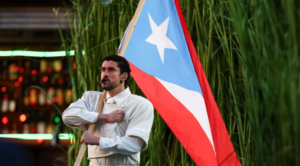
Bad Bunny held the red, white, and light-blue Puerto Rican independence flag, not the darker blue used by the state.
The light-blue flag is a symbol of decolonization and sovereignty, carried by those who believe Puerto Rico deserves self-determination, not territorial status.
A reminder that culture, symbols, and visibility are political, especially when placed on a global stage.
Representation Across Generations
One of the most tender moments came when Bad Bunny addressed the camera directly, encouraging children to believe in themselves, before symbolically passing a Grammy to his younger self. It was a message about possibility, self-worth, and continuity: honouring where you come from while daring to imagine more.
That theme carried through the multigenerational scenes that followed, elders dancing alongside youth, families celebrating together, children drifting off to sleep in chairs mid-party. Legacy wasn’t framed as nostalgia. It was framed as a responsibility.
Fashion as Narrative
Even Bad Bunny’s wardrobe carried cultural weight. For his halftime performance, he chose a custom outfit by the Spanish fashion brand Zara, a notable departure from the luxury couture typically seen on Super Bowl stages. Standing in an all-cream ensemble designed by Zara, Bad Bunny sent a subtle but powerful message about identity and accessibility by grounding the world’s biggest fashion moment in a globally recognized label rather than an exclusive luxury house.
The centrepiece of that outfit was a football jersey emblazoned with his family name, “Ocasio,” and the number 64. “Ocasio” isn’t a fashion moniker, its Bad Bunny’s real last name, and including it on a garment watched by hundreds of millions was a vivid choice to foreground his heritage and maternal lineage on one of the biggest global stages of the year. While the exact significance of the number 64 isn’t officially confirmed, many fans interpret it as a personal nod to family possibly linked to the year his mother was born reinforcing that this performance was deeply rooted in personal and cultural history, not just spectacle.
Love as a Radical Act
At the heart of the performance was a wedding, not staged, not symbolic, but real. Two people were legally married on one of the largest stages in the world. In many cultures, weddings are not just personal milestones; they are communal affirmations of unity, love, and belonging.
The message was unmistakable: love is more powerful than hate.
Joy is resistance.
Community is survival.
Expanding “America”
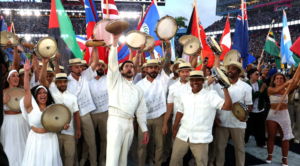
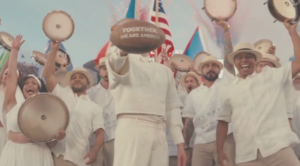
As the performance closed, Bad Bunny said “God Bless America” then proceeded to name countries across South, Central, and North America. It was a deliberate reframing of what, and who, the U.S. (“America”) includes.
The final scene, a joyful celebration surrounded by dancers, family, friends, and fellow Puerto Rican artists, reinforced the values underpinning the entire show. The collaborators weren’t random guest appearances; they were people who share his vision, values, and commitment to cultural integrity.
Key Takeaways
This wasn’t just a halftime show. It was a lesson in inclusive leadership, culture, colonialism and neglect, and values-driven storytelling.
- Diversity is our strength. It’s the foundation of innovation and creativity.
- Unity doesn’t require sameness; it requires respect and space for truth.
- Hope is built by honouring the past while investing in future generations and continuing to dream of better.
This moment asks us to engage differently.
It calls us to engage with one another more honestly, to have people-powered conversations about dignity, safety, and the rights we all deserve at work, in our communities, and beyond. Not performative dialogue, but real engagement rooted in listening, accountability, and shared humanity.
If we say we value people’s identities and histories, that commitment has to also show up when their communities are under attack. Culture doesn’t exist in isolation from power. To honour it fully means standing with people not only when it’s joyful, but when it’s hard.
Bad Bunny showed what’s possible when representation is intentional, culture is centred, and love is treated as a force for change.
And millions of people were better for witnessing it.
Stay Connected
Sign up for our newsletter to be the first to know.
Contact us to learn more: hello@canadianequality.ca